My Cowboys Are Black
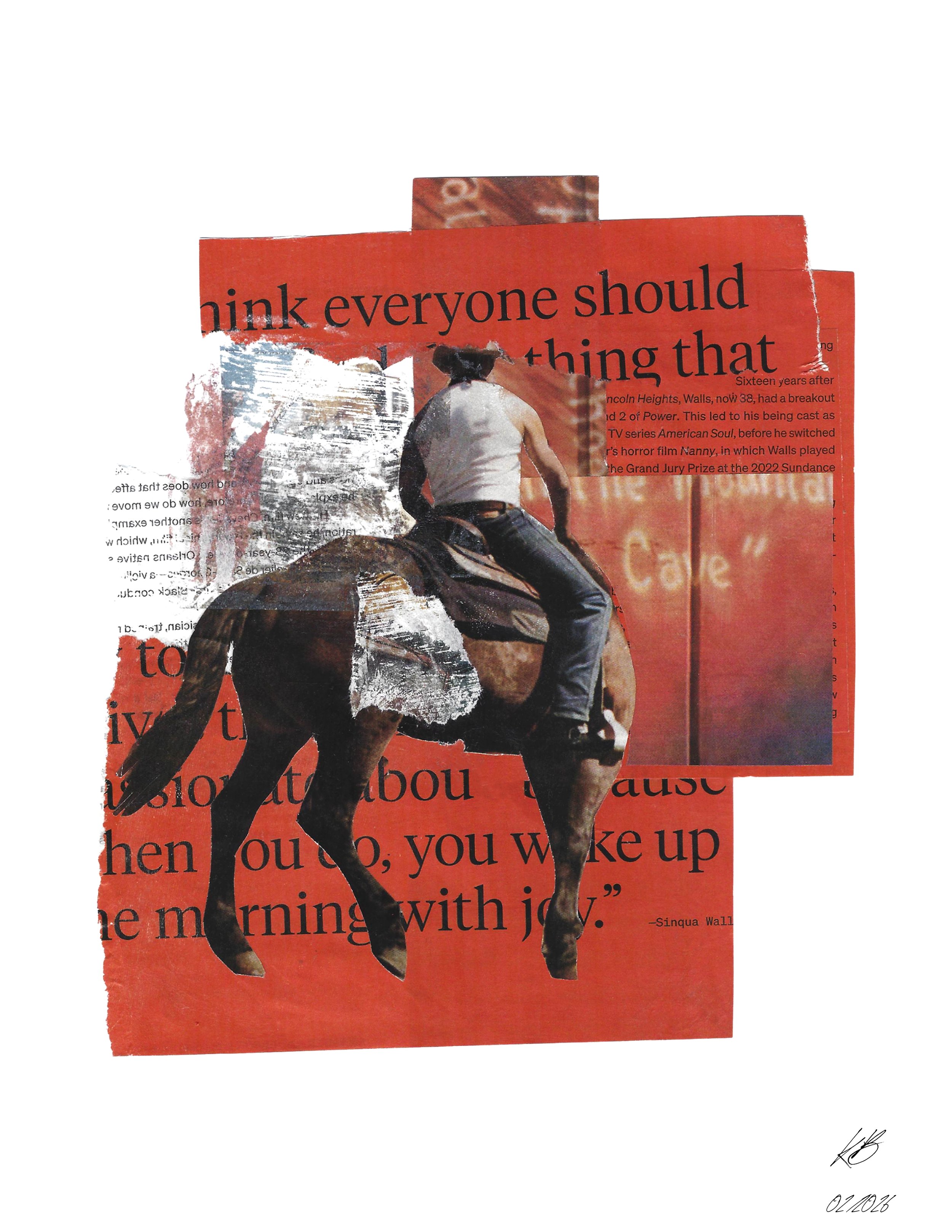
Growing up, I remember having the Black version of everything.
Black Santa.
Black Jesus.
A Black president.
My home reflected who lived inside it. Representation mattered in our house. We had images, books, and conversations that centered Black life and Black pride.
But outside our home, the world told a different story.
Certain professions and identities were almost always shown to me as non-Black: cowboys, pilots, lawyers, and explorers. When I did see Black versions of these figures, it felt almost mythical, like seeing a Black Santa at the mall. Something symbolic rather than something real.
I remember seeing Black cowboys riding horses through different cities when I was younger. Being in Southern California, that is a very rare sighting. At the time, I thought they were a unique subgroup of people; they felt almost like a cultural niche.
I didn’t realize then that they were actually preserving something much deeper.
They were carrying on the true identity of what an American cowboy was.
Historians now estimate that one in four cowboys in the American West was Black, particularly in the late 1800s after the Civil War. Many formerly enslaved men became cowboys because ranch work offered something rare at the time: relative freedom, decent wages, and a level of respect that was hard to find elsewhere.
Black cowboys helped shape the culture of the American West, breaking horses, driving cattle across long distances, and helping build the ranching economy that became central to American mythology.
Figures like Nat Love, also known as “Deadwood Dick,” became legendary for their riding and roping skills. Others like Bill Pickett, who invented the rodeo technique known as bulldogging (now called steer wrestling), transformed rodeo culture itself. Bass Reeves, the legendary Black U.S. Deputy Marshal, whose courage and skill are believed to have inspired the Lone Ranger.
Yet their stories were largely erased from the version of the West that Hollywood chose to tell.
The cowboy we saw in movies, books, and on television was almost always white.
But the reality was far more diverse.
So when I think back to those riders I saw moving through the streets of Los Angeles — boots, horses, confidence — I see them differently now. They weren’t a novelty.
They were part of a lineage.
They were keeping alive a history that America tried to forget.
And now, cowboys are something I proudly add to the list of things I consider to be Black.